.BESwkItx.svg)
.BsOtZXJZ.svg)


.DDDvVA6M.svg)

.CXHK89EX.svg)



.DNyc9mlT.svg)
Jagannath Puri Temple India: The Hidden Truths Behind Sacred Mysteries
Jagannath Puri Temple India: The Hidden Truths Behind Sacred Mysteries
The Jagannath Puri Temple India stands as one of the world's most enigmatic spiritual destinations, shrouded in mysteries that have captivated millions of devotees and researchers for centuries. Among the sacred mysteries that define this remarkable temple, one phenomenon stands out: the temple flag that has defied wind direction for over 1,800 years.
Every year, over 5 million visitors journey to Jagannath Puri to witness the divine Jagannath Darshan, participate in the legendary Rath Yatra, and experience what many describe as a life-transforming spiritual encounter. Yet most visitors remain unaware of the hidden truths embedded within the temple's ancient walls—secrets passed down through generations of priests, preserved in Sanskrit texts, and verified through centuries of observation.
This comprehensive guide unveils the sacred mysteries of Jagannath Temple, explains their spiritual significance, provides practical information for your visit, and explores the fascinating intersection between ancient wisdom and modern scientific inquiry.
💡 Quick Note: Earn rewards and Money
If you enjoy articles like this, here is a gamified hub,Palify.io,where you earn rewards and money simply by creating an account and contributing to knowledge challenges. Share ideas and articles, participate in skill games, and climb the leaderboard while learning cutting-edge AI skills. Sign Up Now before it’s too late.
The History and Spiritual Significance of Jagannath Temple
Understanding the Legacy: From King Indradyumna to Modern Day
The Jagannath temple history spans more than 1,000 years of continuous worship, architectural evolution, and spiritual transformation. According to Jagannath puri mythology, the temple's origin traces back to the legendary King Indradyumna of the Malava Kingdom, who, after performing severe penance, was granted a divine vision directing him to find a sacred wooden log on the Odisha coast.
In the 12th century, King Anantavarman Chodaganga Deva constructed the magnificent Shree Jagannath temple puri we see today, employing the distinctive Kalinga architecture that has become synonymous with the temple's mysterious properties. Standing approximately 65 meters tall, the main temple tower dominates the Puri landscape and is surrounded by a vast complex covering over 37,000 square meters.
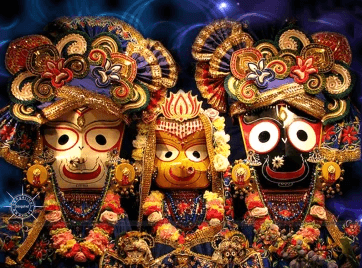
What makes Jagannath temple in puri unique among all char dham pilgrimage sites is that the deities—Lord Jagannath, Balabhadra, and Subhadra—are carved from sacred neem wood rather than stone or metal. This distinction is central to understanding the most profound sacred mysteries of the temple: the Nabakalebara ceremony.
The puri temple significance extends beyond religious practice to encompass philosophical principles that have influenced Odisha's culture for over a millennium. The temple stands as a testament to the principle that spirituality transcends all social divisions, making it the world's first democratic temple in the truest sense.
The Eight Sacred Mysteries of Jagannath Temple: Unraveling Hidden Truths
Mystery 1: The Flag That Defies Wind Direction
Among all Jagannath temple mysteries, perhaps none is more perplexing than the phenomenon of the flag's direction mystery. Atop the temple's main tower stands the sacred flag—replaced daily for over 1,800 years—that exhibits an extraordinary and unexplained behavior: it always flows in the opposite direction of the prevailing wind.
This flag's direction mystery is perpetuated through one of the most perilous daily rituals in the world. A dedicated priest, without any safety equipment, scales the 150-foot temple tower daily to replace the Jagannath Puri Temple flag—a ritual that has been performed continuously for approximately 1,800 years.
According to temple chronicles, on the rare occasions when this ritual has been interrupted, the city has allegedly experienced significant disturbances, leading to a complete 18-year closure of the temple. This 1800 years old tradition represents one of the most consistent sacred practices in human history.
Scientific theories suggest this may involve localized wind patterns created by the temple's unique architectural design, the surrounding geography of Puri, and the elevation of the temple structure. However, these explanations remain speculative and incomplete, as the phenomenon is far more consistent and pronounced than would be expected from standard meteorological principles.
Mystery 2: The Sudarshan Chakra's Optical Wonder
Among the most scientifically perplexing sacred mysteries is the behavior of the Sudarshan Chakra—the massive golden wheel perched atop the temple's spire. This 20-foot-diameter wheel presents an optical paradox: no matter from which angle you observe the Sudarshan Chakra, the wheel appears to be facing directly toward you.
The temple chakra mystery involves a seemingly impossible phenomenon. Pilgrims approaching from the east, west, north, or south all report the same experience: the wheel appears to rotate toward them individually. This is not an illusion created by distance or perspective—it is a deliberate architectural feature.
Technical analysis reveals a masterpiece of Kalinga architecture and symmetrical design. The wheel's eight spokes are positioned with such precise mathematical symmetry that they create an optical effect which, combined with the curvature of the tower and the specific proportions of the surrounding structures, produces this remarkable phenomenon.
Mystery 3: The Temple Casts No Shadow
One of the most verifiable yet scientifically unexplained Jagannath temple mysteries is the remarkable fact that the main temple structure casts no shadow at midday or during specific times of day. The no shadow mystery appears to be connected to the temple architecture and the precise angles at which the Kalinga-style spire was constructed.
The temple tower was oriented and positioned such that, due to its curvilinear design and the specific trajectory of the sun over Puri, the structure's shadow pattern is disrupted or absent during key hours. Mathematical analysis of the temple's orientation reveals that the architects possessed sophisticated understanding of solar geometry and the sun's annual trajectory across the sky.
Mystery 4: Nothing Flies Above the Temple Premise
Another documented Jagannath Puri Temple mystery is the curious phenomenon that no birds fly directly above the main temple tower, and historically, no aircraft have ever crashed near the temple airspace.
Electromagnetic field theories suggest the temple may emit electromagnetic frequencies that disrupt bird navigation systems. Magnetic anomaly hypotheses propose that the temple's location sits atop geological formations that produce unusual magnetic characteristics.
Atmospheric phenomenon theories suggest the precise positioning of the structures creates unique air currents or pressure systems that birds instinctively avoid.
Mystery 5: Mahaprasad—The Sacred Food That Breaks All Barriers
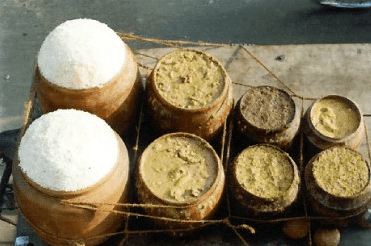
The Mahaprasad of Jagannath Puri Temple represents a revolutionary social principle: sacred food distributed without regard to caste, creed, religion, or social status. The Mahaprasad consists of 56 different delicacies prepared in five distinct phases throughout the day, each with specific spiritual and nutritional significance.
The 56 dishes prepared include rice dishes, vegetable preparations, lentil-based dishes, milk-based sweets, grain-based preparations, and spiced delicacies with medicinal properties. The Ananda Bazaar represents the final distribution point where Mahaprasad is sold and consumed.
What makes Mahaprasad revolutionary is its radical egalitarianism: everyone who consumes Mahaprasad is equal. A king eating sacred food sits alongside a peasant, a Brahmin alongside a laborer, a Hindu alongside a visitor of any faith. The prasad spiritual significance represents the principle that the divine is equally accessible to all humans, transcending all artificial social divisions.
Mystery 6: Wooden Idols and the Nabakalebara Ceremony
The most profound and mysterious aspect of Jagannath temple in puri is the sacred ritual of Nabakalebara, also spelled Navakalevara—a ceremony that occurs every 8, 12, or 19 years, depending on the lunar calendar. This ritual involves the complete replacement of the wooden idols of Lord Jagannath, Balabhadra, Subhadra, and Sudarshan.
The Nabakalebara ceremony is rooted in the belief that physical forms—even divine ones—undergo decay and require renewal. The most recent and well-documented ceremony occurred in 2015, 19 years after the previous ceremony in 1996.
The 2015 Nabakalebara: A City-Wide Phenomenon
During the 2015 Nabakalebara, the city of Puri underwent an unprecedented phenomenon: the entire city's electrical power was shut down at midnight during the Brahma Padartha transfer. This was not an accident but a deliberate ritual requirement observed for over 400 years.
The Mystery of Brahma Padartha: What Is This Sacred Substance?
The Brahma Padartha represents one of Hinduism's most closely guarded spiritual secrets. The exact nature of this sacred substance has been the subject of speculation, research, and spiritual inquiry for centuries.
Official temple accounts describe the Brahma Padartha as the spiritual essence—the very soul or divine life force—that animates the idols. It is believed to be transferred from the old wooden idols to the new ones during the midnight ceremony, essentially preserving the continuity of the deity's presence and power despite the physical replacement.
Historical claims and theories have generated considerable speculation:
Some devotees and scholars believe the Brahma Padartha contains physical remains
References to "Lord Krishna's Heart" in various Hindu texts have led some to theorize that the Brahma Padartha contains this sacred object
A small amount of substance reportedly has a silvery or luminescent appearance
Some research suggests electromagnetic properties associated with the Brahma Padartha
The Nabakalebara Process: Selection of Sacred Neem Trees
The search for appropriate sacred neem trees for carving the new idols begins years in advance. The trees must meet extraordinarily specific requirements:
Exactly four principal branches, symbolizing the four arms of Narayana
A Shiva Temple must exist nearby the tree
A hermitage or sacred dwelling must be in proximity
Natural impressions resembling a conch shell and chakra must be visible on the trunk
The Daru Brahma (divine essence in wooden form) trees are transported in specially constructed wooden carts pulled by oxen. The carving occurs in a specially constructed enclosure called the Nirman Mandap (carving house), located at Koili Vaikuntha (sacred burial ground within the temple premises).
The carving process adheres to extraordinary restrictions:
Complete secrecy—not even the temple's head priest is permitted to enter
Over 50 additional carpenters assist with the process
The carving is completed within 21 days
Carvers are not permitted to leave the carving enclosure
The carvers' meals consist exclusively of Mahaprasad
Vedic chants and shlokas are recited by Brahmin priests throughout the carving period
This 21-day period represents a spiritual retreat where carvers enter a meditative, nearly monastic state.
The Sacred Transfer—Brahma Padartha Ghat Paribartan
The transfer of the Brahma Padartha represents the most secret and sacred moment of the Nabakalebara ceremony. This occurs at midnight on the Chaturdashi (14th lunar day) following specific astrological calculations.
The Midnight Ritual:
At midnight, the entire temple premises is cleared of all personnel except for designated officials
The city of Puri's electricity is switched off (a modern adaptation of the traditional "darkening" ritual)
Only a single oil lamp illuminates the sacred space
Three Daitapati (high priests) and one Pati Mohapatra priest conduct the transfer
The priests wear blindfolds and ceremonial gloves, preventing direct physical contact with the Brahma Padartha
Following the transfer, the old idols are buried ceremonially at Koili Baikuntha (divine burial ground) within the temple premises
This elaborate secrecy serves multiple purposes: protection of sacred knowledge from external manipulation, preservation of the mystery as essential to the faith itself, prevention of commercialization, and maintenance of the priestly lineage's exclusive responsibility.
Rath Yatra Puri: The Democratic Festival of the Divine
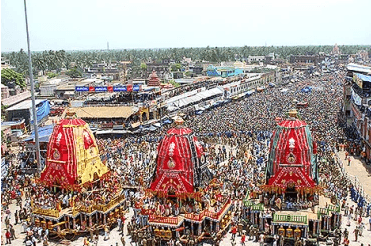
The Rath Yatra Puri stands as one of the world's most significant religious festivals, attracting 5+ million pilgrims annually. This annual chariot festival is not merely a religious celebration but a democratic assertion: the divine belongs to all people.
The Mythology Behind Rath Yatra: Why the Chariot Journey?
According to ancient Hindu texts, the Rath Yatra commemorates an annual journey undertaken by Lord Jagannath, Lord Balabhadra, and Goddess Subhadra to the Gundicha Temple, located approximately 2 kilometers away. According to temple mythology, the Gundicha Temple is the residence of the deities' aunt, and the annual journey represents a divine family reunion.
The Rath Yatra significance carries profound symbolism: the journey represents the eternal principle of dharma (duty) transcending even divine status.
Rath Yatra 2025: Timeline and Key Rituals
The Rath Yatra 2025 festival will occur over approximately 10 days, with specific ritual milestones marking the spiritual progression of the celebration.
Snana Purnima (Bathing Ceremony) - June 24, 2025:
The deities are given a ceremonial bath using water from 108 pots, followed by offerings of fruits, flowers, and fragrances.
Anavasara (Seclusion Period) - June 24 to July 2, 2025:
For 9-10 days, the deities remain in the inner sanctum, not visible to devotees.
Netrotsava (Eye Opening Ceremony) - July 2, 2025:
The deities' eyes are ceremonially opened, signifying their readiness to meet devotees.
Chhera Pahanra (The Sweeping Ritual) - July 4, 2025:
The Gajapati Maharaja sweeps the chariot platforms with a golden broom, emphasizing that no one is so exalted that they cannot serve the divine.
The Grand Procession (Main Rath Yatra) - July 4-5, 2025:
The three chariots begin their approximately 3-kilometer journey from the Jagannath Temple to the Gundicha Temple journey, pulled by thousands of devotees. Over 5 lakh (5 million) devotees are expected to participate.
Each chariot has specific significance:
Nandighosha (also called Singha Dwaja) - Chariot of Lord Jagannath (red and gold colors)
Taladhwaja (also called Nandi) - Chariot of Lord Balabhadra (blue and gold colors)
Darpadalana (also called Padma) - Chariot of Goddess Subhadra (black and gold colors)
Each chariot stands approximately 45 feet tall and weighs hundreds of tons, constructed from approximately 4,200 wooden pieces bound without nails.
The Complete Visitor's Guide to Jagannath Temple Darshan
Temple Timings and Best Darshan Windows
The Jagannath temple darshan occurs throughout the day, with varying levels of crowds and spiritual intensity at different times.
Daily Jagannath Temple Timings
General Opening Hours: 5:30 AM - 9:00 PM
Early Morning Darshan (5:30 AM - 9:00 AM) - BEST FOR SPIRITUAL EXPERIENCE
Mangal Aarti (5:00 AM) - First ritual of the day; deity is dressed and prepared
Mailam (6:00-6:45 AM) - Rituals following initial worship
Sahanamela (7:00-8:00 AM) - General public darshan begins
BEST TIME: 5:45-8:00 AM (least crowded, purest spiritual energy)
Crowd Level: Moderate (hundreds, not thousands)
Duration: 15-30 minutes to reach deity
Afternoon Respite (2:00 PM - 5:00 PM)
EXCELLENT OPPORTUNITY: 2:00-5:00 PM (peaceful, often overlooked)
Crowd Level: Very Low
Duration: 20-40 minutes
Evening and Night Darshan (5:00 PM - 9:00 PM)
Sandhya Aarti (5:30 PM) - Evening ritual with vibrant ceremonies
BEST TIME FOR RITUAL: 5:30-7:00 PM (witness beautiful ceremonies)
Crowd Level: High to Very High
The New 2025 Queue System: Dhadi Darshan (Six-Line System)
Effective January 1, 2025, the Jagannath temple puri entry system has been reorganized into the Dhadi Darshan system:
Queue Line 1: People Requiring Assistance (15-30 min wait)
Queue Line 2: Women and Children (20-40 min wait)
Queue Line 3: Elderly and Senior Citizens (10-20 min wait)
Queues 4-6: General Visitors (30 min - 2 hours)
Entry Information and Access Points
Main Entry Point: Singha Dwara (Lion Gate)
Located on the east side of the temple
1,100 steps from the main road
Modern facilities and water stations
Queuing areas with shade structures
Dress Code Requirements for Jagannath Temple Darshan
The dress code rules at Jagannath Puri Temple reflect the sanctity and spiritual significance of the space.
For Men:
Required: Dhoti or traditional kurta
Avoid: Western shirts or t-shirts
Footwear: Must be removed before entering
For Women:
Required: Sarees or Salwar Kameez with full body coverage
Required: Dupatta or scarf for head coverage
Avoid: Leggings alone, tight-fitting clothing
Footwear: Recommended to be removed
Items Specifically Prohibited Inside Temple:
Leather Items: Belts, bags, wallets, shoes
Mobile Phones and Electronics: No cameras, video devices
Umbrellas and Large Items: Impedes movement
Non-Vegetarian Food: Cannot be brought
Intoxicants: Strictly forbidden
Begging or Solicitation: Not permitted
How to Reach Puri Jagannath Temple
By Air
Nearest Airport: Biju Patnaik International Airport, Bhubaneswar
Distance from Puri: 65 kilometers
Travel Time: 1.5-2 hours by road
Cost: Approximately ₹1,500-2,500 for taxi
Airlines: IndiGo, SpiceJet, Air India, Vistara
Flights from Major Indian Cities:
From Delhi: 2-3 flights daily, 1.5-2 hours
From Kolkata: 4-5 flights daily, 1 hour
From Mumbai: 3-4 flights daily, 2-2.5 hours
By Train
Primary Railway Station: Puri Railway Station
From New Delhi: 24-30 hour journey
From Kolkata: 12-16 hour journey
From Bhubaneswar: 2-3 hour journey
By Road
National Highway Access: NH16 connects Puri to major cities
From Bhubaneswar: 65 km, 1.5-2 hours
From Kolkata: 500 km, 8-10 hours
From Visakhapatnam: 400 km, 7-8 hours
Local Transportation in Puri
Auto-rickshaws: Abundant, negotiate rates
Taxis: Available through hotels
Bicycles: Interesting option for exploration
Walking: Feasible for nearby areas
Best Time to Visit Puri: Seasonal Considerations
Climate and Weather Patterns
Winter Season (October-February) - BEST SEASON
Temperature: 15-30°C - comfortable and pleasant
Rainfall: Minimal
Crowd: Peak season
Best Time: October-November, February
Summer Season (March-May)
Temperature: 28-38°C - extremely hot
Rainfall: Minimal
Crowd: Moderate
Challenge: Heat-related stress
Monsoon Season (June-September)
Temperature: 20-28°C - cool and comfortable
Rainfall: Heavy, frequent showers
Crowd: Low to moderate
Advantage: Lower crowds, authentic experience
Festival Seasons:
Rath Yatra (June-July): 5+ lakh pilgrims - high crowds
Navratri (Sept-Oct): High crowds, spiritual significance
New Year Period (Dec-Jan): Peak tourism
RECOMMENDATION FOR OPTIMAL VISIT: October-November or February
Nearby Tourist Attractions and Exploring Puri
Konark Sun Temple (35 kilometers)
UNESCO World Heritage Site
13th-century architectural masterpiece
Distance: 35 km from Jagannath Temple Puri
Travel Time: 1-1.5 hours
Entry Fee: ₹300 Indian nationals, ₹500 foreigners
Chilika Lake (40 kilometers)
Asia's largest saltwater lagoon
Birdwatching paradise (October-February)
Dolphin sightings
Travel Time: 1-1.5 hours from Puri
Puri Beach
Adjacent to temple
Sunset viewing point
Swimming and water sports
Best Time: Early morning or evening
Gundicha Temple (2.2 kilometers)
The "Aunt's House" where Rath Yatra deities reside annually
15th-century temple
Tranquil, less-crowded environment
Travel Time: 10-15 minutes by auto-rickshaw
Markandeswara Temple (Nearby)
Ancient temple dedicated to Lord Shiva
Located within walking distance
Free entry
Accommodation Options Near Jagannath Temple
Budget Options (₹500-1,500 per night)
Basic guesthouses and homestays
Ashrams offering affordable accommodation
Located 100m-500m from temple
Mid-Range Hotels (₹1,500-5,000 per night)
Comfortable rooms with basic amenities
Various locations across Puri
500m-2 km from temple
Premium Hotels (₹5,000-15,000+ per night)
High-end accommodation with modern facilities
Multi-restaurant facilities
Beach-adjacent properties
1-3 km from temple
Ashrams and Dharmashalas
Traditional accommodation for pilgrims
Extremely affordable (₹200-500 per night)
Community-oriented experience
Practical Information and Important Notes
Entry Fees
Entry Fee to Jagannath Puri Temple: ₹0 (COMPLETELY FREE)
No entry charges for any visitor
No special darshan fees
Offerings and donations are voluntary
FAQ - Frequently Asked Questions About Jagannath Puri Temple
Q: Can non-Hindus visit the Jagannath Puri Temple?
A: Yes, non-Hindus can visit Puri and experience many aspects:
Enter the outer temple complex freely
View the deity through the Patitapabana
Participate in Rath Yatra (explicitly open to all faiths)
Consume Mahaprasad (freely available to all)
Explore surrounding areas
However, non-Hindus cannot enter the inner sanctum where the main deities are located.
Q: Are women allowed to visit the Jagannath Temple?
A: Yes, Hindu women of all ages are fully permitted to enter the entire temple. There are no gender-based entry restrictions. The Dhadi Darshan system includes a dedicated queue for women.
Q: What is the dress code for visiting the Jagannath Puri Temple?
A: Men: Dhoti and kurta or traditional attire. Women: Sarees or salwar kameez with full body coverage.
Q: Can I take photographs or videos inside the temple?
A: No. Photography, videography, or any form of recording is strictly prohibited inside the temple premises.
Q: What is the best time to visit Jagannath Temple for spiritual experience?
A: Early morning 5:30-7:30 AM during the Mangal Aarti and Mailam rituals.
Q: How long does darshan typically take?
A: Duration varies: Early morning (15-30 min), Moderate times (20-45 min), Peak times (30 min to 2 hours).
Q: What is the nearest airport to Jagannath Puri Temple?
A: Biju Patnaik International Airport, Bhubaneswar (65 km, 1.5-2 hours travel time).
Q: How do I reach Puri from Delhi?
A: Flight (5-6 hours total), Train (24-30 hours), or Road (30-36 hours).
Q: Is there an entry fee for visiting Jagannath Puri Temple?
A: No entry fee whatsoever. Completely free to visit.
Q: What should I carry when visiting the temple?
A: Cash, water bottle, small towel, sunscreen, hat, comfortable shoes (removed at entrance).
Q: Where can I eat near the Jagannath Puri Temple?
A: Mahaprasad at Ananda Bazaar, or restaurants in surrounding Puri area.
Conclusion: The Essence of Jagannath Puri Temple India
The Jagannath Puri Temple India stands as a living monument to humanity's perpetual quest to understand the divine, transcend material limitations, and establish spiritual principles that survive centuries of change. The hidden truths embedded within this sacred temple reveal something profound about ancient wisdom: that spirituality and material reality are fundamentally integrated.
The sacred mysteries—the flag defying wind, the chakra facing all observers equally, the temple casting no shadow, the wooden idols renewed eternally—are not supernatural contradictions of physical law but rather manifestations of principles that operate at the intersection of material and spiritual dimensions.
What makes Jagannath Temple unique is that it demonstrates how ancient wisdom traditions possessed sophisticated understanding of geometry, acoustics, psychology, and spiritual practice—knowledge encoded into physical structures in ways that continue to produce measurable, observable effects.
The spiritual significance of Lord Jagannath—with incomplete form and all-encompassing gaze—teaches the ultimate lesson: the divine is not limited by conventional boundaries, and spirituality transcends all artificial divisions. The Mahaprasad distributed equally to all visitors and the Rath Yatra open to all faiths represent practical spirituality—ancient wisdom made manifest in daily practice.
For millions of pilgrims annually, the Jagannath Darshan represents not merely religious obligation but personal transformation. Visitors report profound spiritual experiences ranging from emotional healing to mystical encounters to clarification of life's purpose.
Planning your Jagannath Puri Temple visit should combine practical preparation with spiritual openness. Choose the timing that best suits your needs, follow the entry guidelines and dress code rules respectfully, and approach the experience with genuine curiosity—both about the mysteries and about your own spiritual dimensions.
Visit the Jagannath Temple India. Witness the sacred mysteries. Experience the spiritual transformation. Participate in the Rath Yatra. Consume the Mahaprasad. Perform your darshan. Allow yourself to be transformed by one of humanity's most remarkable spiritual destinations.
The hidden truths are waiting. The Jagannath Puri Temple calls to all who seek spiritual awakening, divine connection, and transcendence beyond material limitations. Whether you visit for faith, exploration, or genuine spiritual seeking, this ancient temple offers profound experiences that resonate for a lifetime.